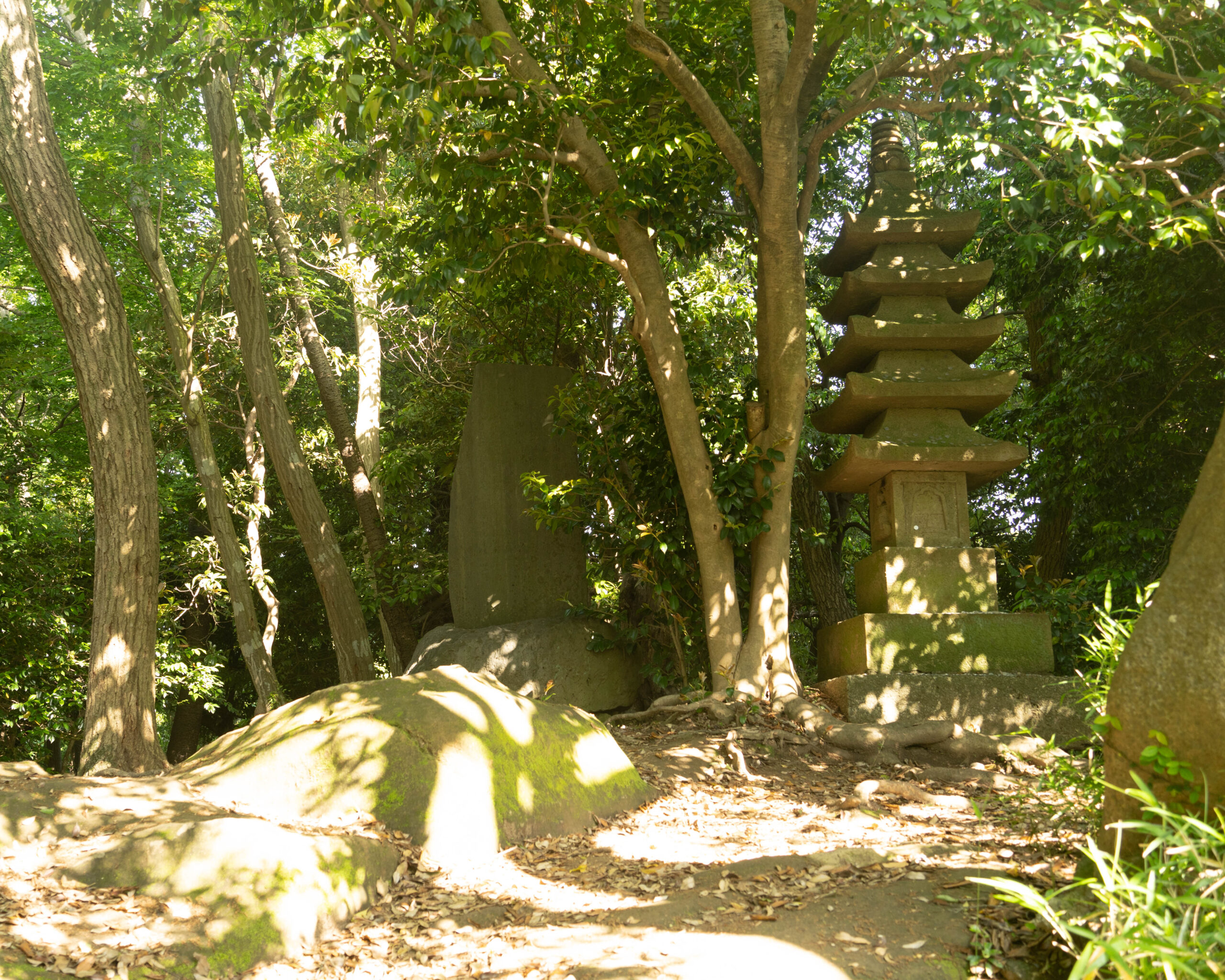

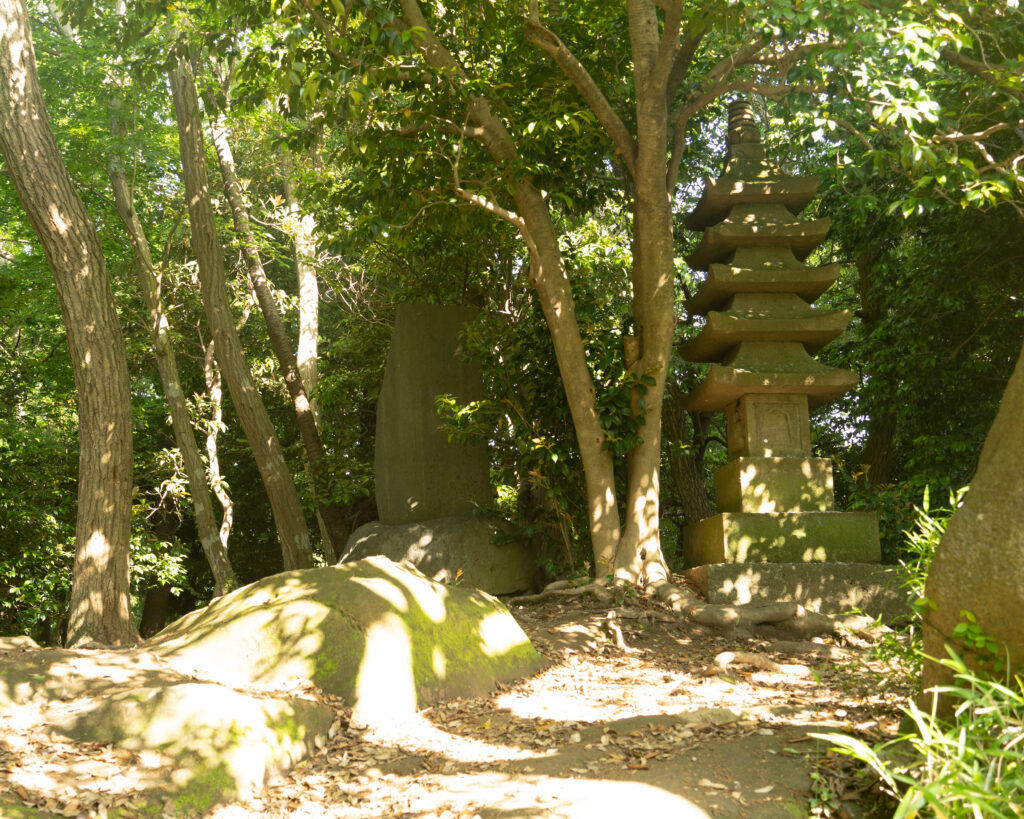
Tianzhu Feng
It is said that a high priest who came to Japan from China and was the abbot of Jochi-ji Temple loved the view from here and named the hill Tenchu-ho (Heavenly Pillar Peak). The word “Tenchu” means “the principle that upholds the world. Today, the surrounding area is covered with trees, and the view from the hill cannot be enjoyed, but it is said to be a power spot. Google Map Learn more about Tenzhu Peak
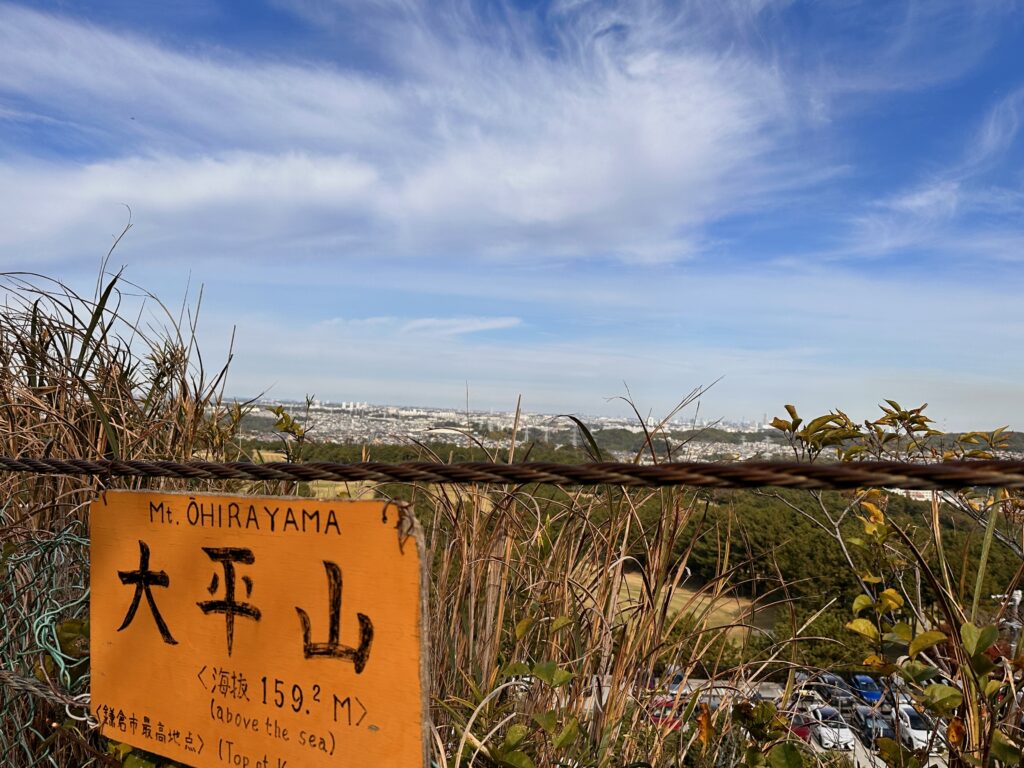
Signboard of Mt.
Mt. Ohira has a sign indicating its elevation. This is the third signboard, and they change it every two to three years when the letters are no longer visible.As we climbed and stood at the top, we met a group of mothers with their 3-4 year old children.One of the children was running around the summit in sandals.You are so energetic, did you climb all the way up the path so far in sandals? What a question! In that circle of conversation, an elderly man, the firstI’m replacing this sign. This is the third one.”While hiking, he was asked by a foreigner how high this mountain was, so he installed a […]
Uchikoshi Tunnel
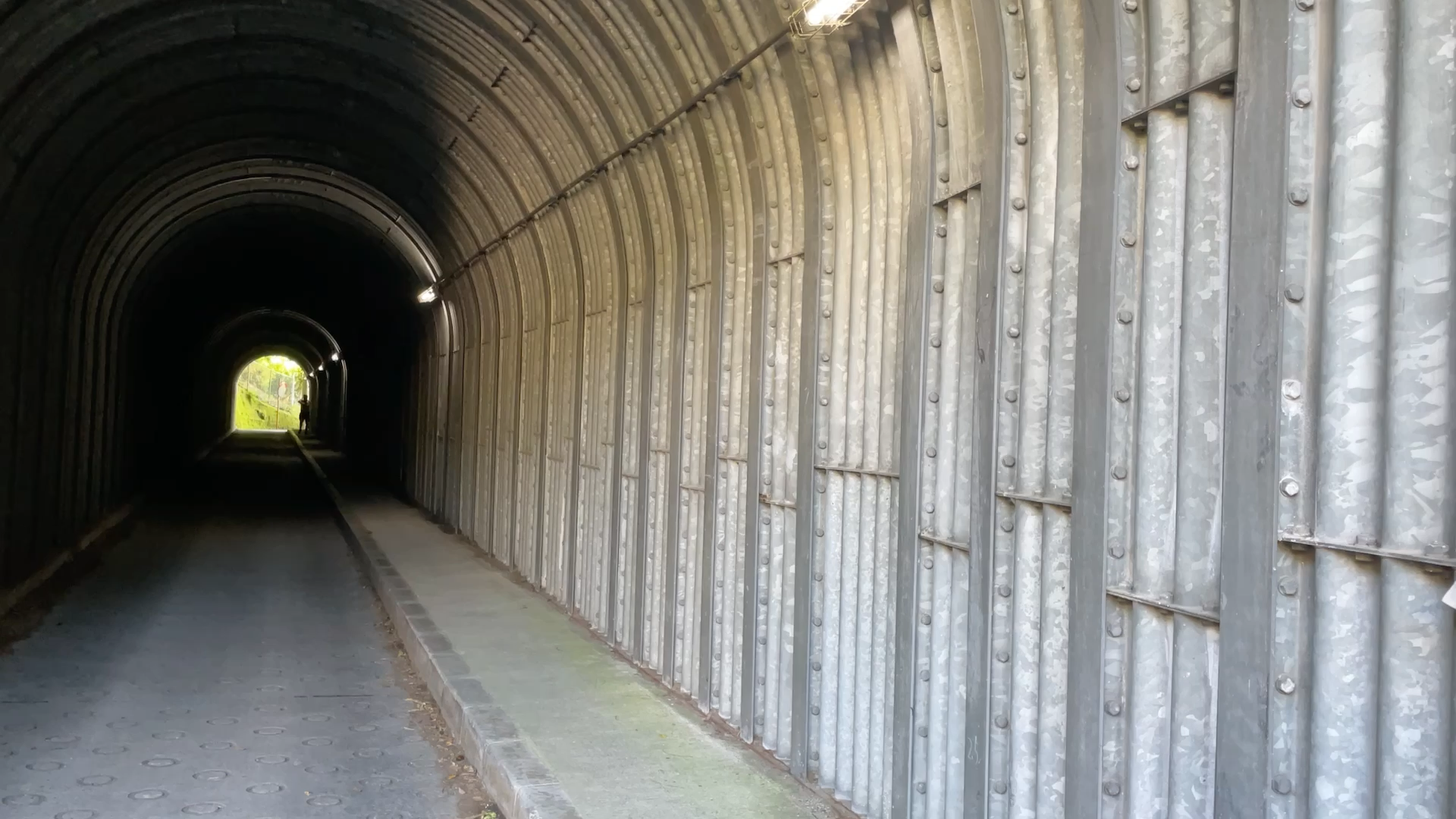
Uchikoshi tunnel Locals call it “Obaton,” meaning “ghost tunnel,” or “Kankan Tunnel” because it is lined with iron plates that make a clanking sound when struck. In the past, there were side holes in the tunnel and a stone Buddha was enshrined at the entrance. It seems to have led to an air-raid shelter and military fortress of the Japanese army, although it seems to be buried now.
Monument to Sir Toshimoto Hino
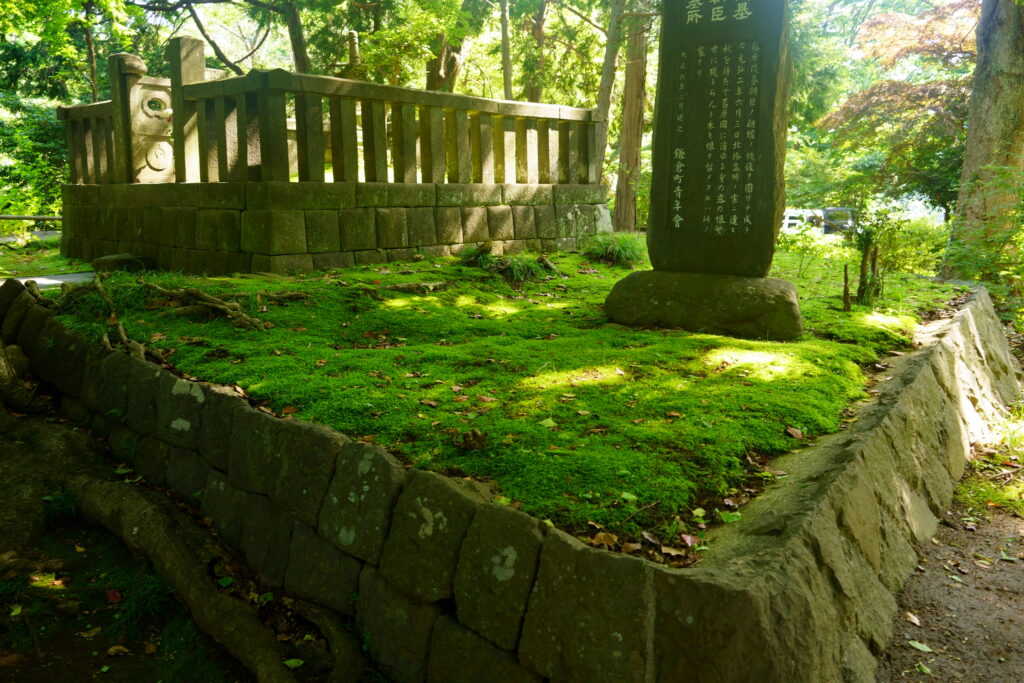
This is the tomb of Toshimoto Hino, a court noble of the late Kamakura period and a close associate of Emperor Godaigo. Although Hino did not come from a prestigious family, he excelled in learning and won the trust of Emperor Godaigo. At Emperor Godaigo’s order, he overthrew the then devastated shogunate and aimed to restore the emperor’s parental rule. He was caught by a tip-off and was arrested, but escaped punishment. This was only one year before the fall of the Kamakura Shogunate. For this reason, he is considered a pioneer in the overthrow of the Kamakura Shogunate. View on Google Maps More about Sir Toshimoto Hino
Zeniarai Benzaiten
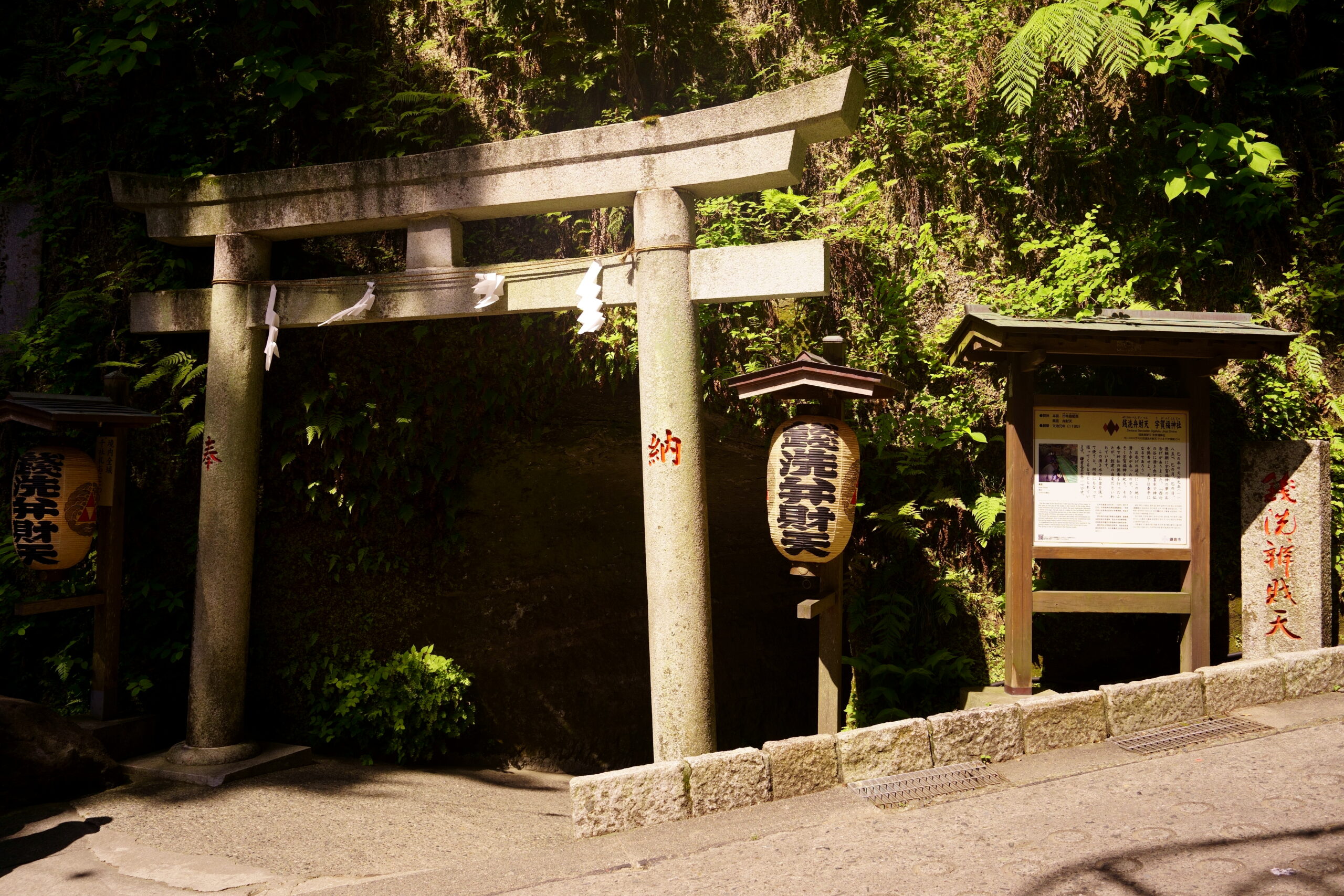
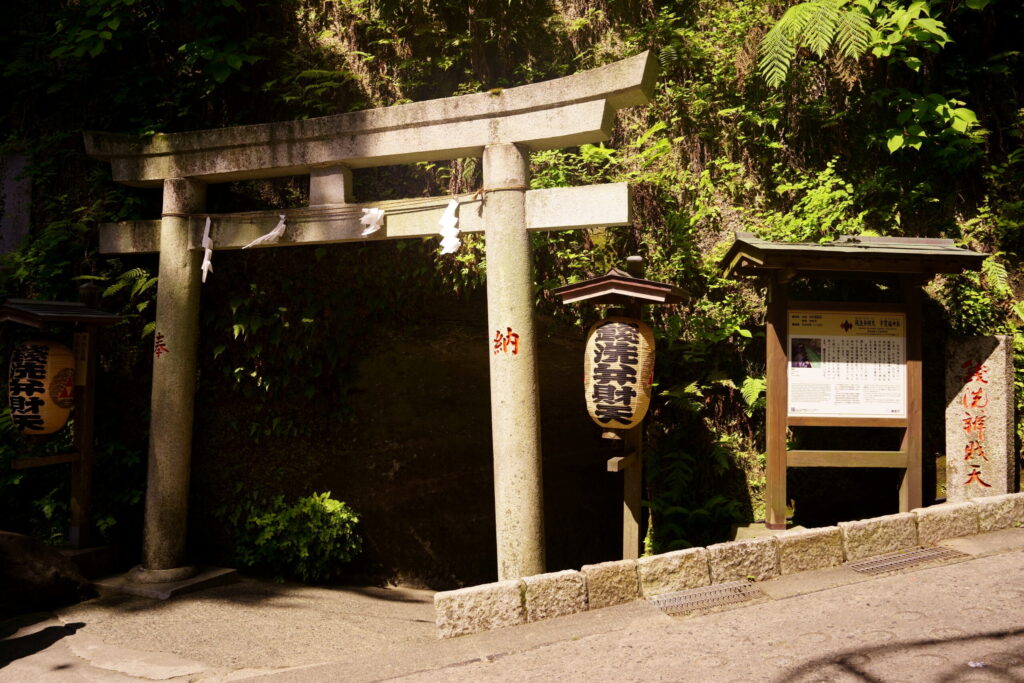
It is known as Senarai-benten because it is said that coins and other items will increase if washed in the fresh water in the cave on the temple grounds. However, it is not necessary to wash all of the bills, but only a part of them. Minamoto no Yoritomo was told by Ugajin, the god of fortune, that if he made offerings to the gods and Buddha with water that gushed forth from this place, a world of peace and fortune would come to him. It is said that the origin of sen-arai (washing of coins) is said to be that Hojo Tokiyori prayed for the prosperity of his family. […]
Saraswati (god of wealth, music, eloquence and water)
It is known as Senarai-benten because it is said that coins and other items will increase if washed in the fresh water in the cave on the temple grounds. However, it is not necessary to wash all of the bills, but only a part of them. Minamoto no Yoritomo was told by Ugajin, the god of fortune, that if he made offerings to the gods and Buddha with water that gushed forth from this place, a world of peace and fortune would come to him. It is said that the origin of sen-arai (washing of coins) is said to be that Hojo Tokiyori prayed for the prosperity of his family.